|
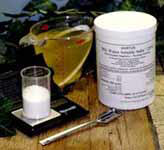
Hortus IBA Water Soluble Salts
Mix with Ordinary Water to Make Rooting Solutions. Soluble to over 100,000 ppm IBA
Replaces Technical IBA and K-IBA, and "DIP type (alcohol based) rooting solutions.
Measure the Salts by weight and mix with water to make any solution concentration.
|
USE BY ALL FOLIAR & BASAL SOLUTION METHODS
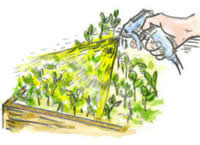
Spray Drip Down
First stick cuttings in media then spray with solution until drip down.
(Hortus IBA Water Soluble Salts® are used to make IBA rooting solutions by the trademarked
Spray Drip Down; all rights are reserved.)
Total Immerse Method
Totally immerse the cuttings in the solution a few seconds then stick in media.
Quick Dip Method
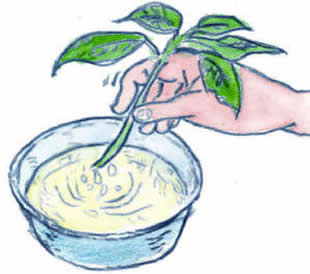
Dip the basal end of the cutting into solution a few seconds then stick in media.
Basal Long Soak Method
Dip the basal end of the cutting into solution a few hours then stick in media.
How to make a Rooting Gel |
|
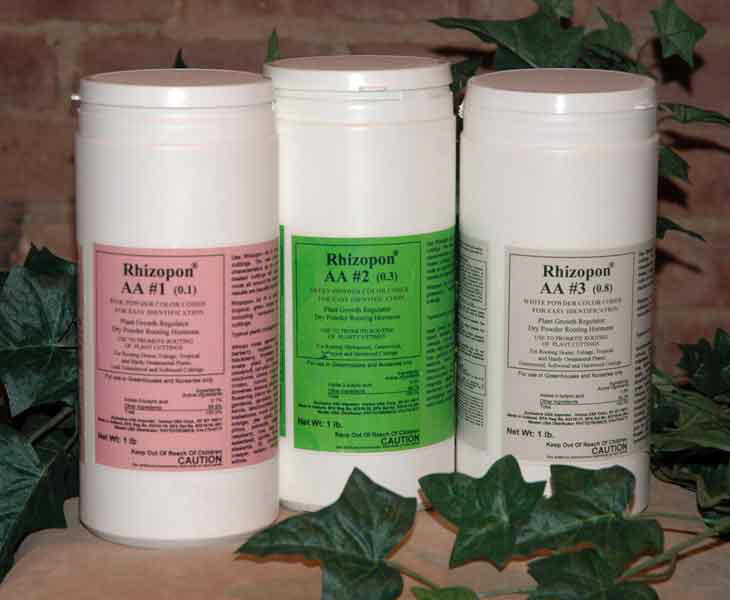
Rhizopon AA #1, #2 and #3
Dry Powder Rooting Hormones
Ready to use Rooting Powders in the three most popular concentrations. Use to root plant cutting by the Dry Dip Method.
|
Rhizopon AA #1: used on easier to root cuttings. Contains 0.1% IBA. Color coded PINK.
Use to root cuttings of house, foliage, tropical and hardy ornamental plants. Herbaceous, leaf, greenwood and softwood cuttings.
Rhizopon AA #2: used on a wide range of cutting types. Contains 0.3% IBA. Color coded GREEN
Use to root cuttings of house, foliage, tropical and hardy ornamental plants. Herbaceous, greenwood, softwood and hardwood cuttings
Rhizopon AA #3: used on harder to root cuttings. Contains 0.8% IBA. Color coded White.
Use to root cuttings of more difficult to root woody ornamental plants. Softwood & hardwood cuttings.
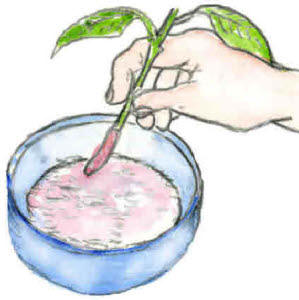
Dry Dip Method
Dip the basal end of the cutting into the powder then stick in media.
|
|
Methods
Dry Dip Method
Foliar Methods
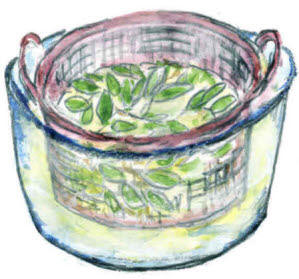
Spray Drip Down and Total Immerse Methods
Quick Dip Method
STENTING Rooting and Grafting at the same time
Transplanting
Cloning
"Cloning" IS Plant Propagation from Cuttings!
With application to legally produced medical cannabis
How tomake a Cloning GEL |
Videos and Animations
ROBOT: application of Rhizopon dry dip rooting hormones (VIDEO)

Spray Drip Down (VIDEO)
STENTING - Rooting and Grafting at the same time (VIDEO)
Plant Propagation using the Spray Drip Down at Decker Nursery (VIDEO)

Three ways that Hortus IBA Water Soluble Salts and Rhizopon Rooting Hormones are applied
|
User Recommendation:
Yoder, Aris information
Yoder recommendations (website)
Yoder recommendations (pdf)
Yoder webpage (website)
Yoder website (pdf)
Download Two Books (free):
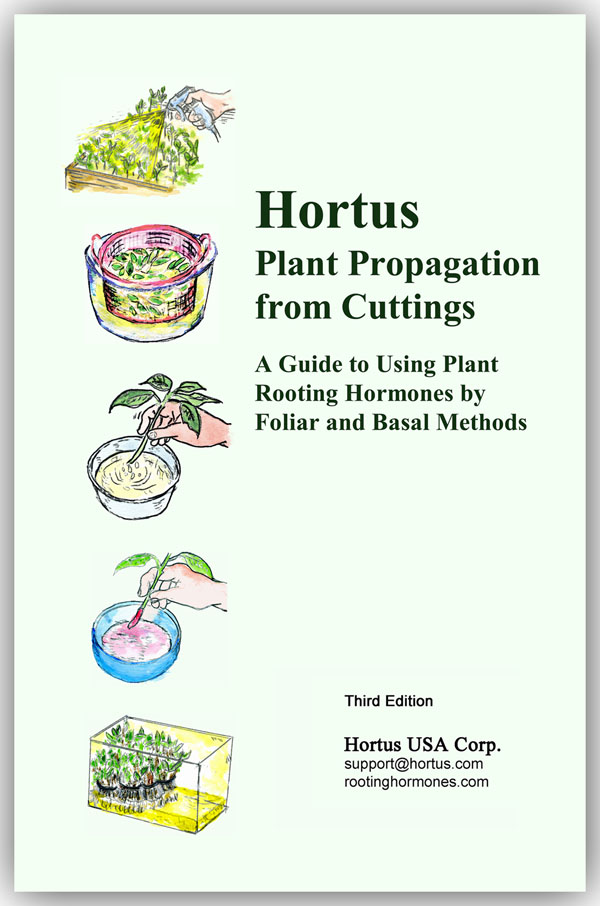
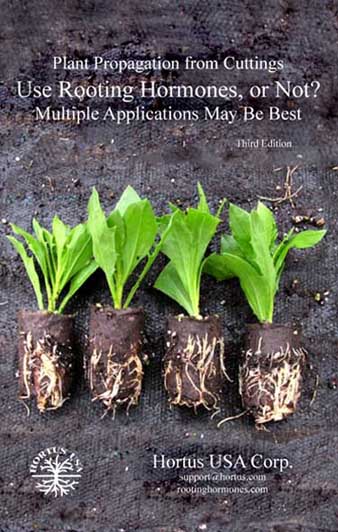
Hortus Plant Propagation from Cuttings.
A guide to using plant rooting hormones by foliar and basal methods
Use Rooting Hormones, or Not?
Multiple applications may be best
Optimizing Plant Production Through Science:
Applied Plant Propagation Methods and Technology
Download Complete Article (pdf)
Bridges the gap between historical, labor-intensive plant propagation (the mass multiplication of plants) and modern techniques. By applying the foundational plant physiology and biochemistry research of leading scientists, professional plant growers and everyone can now fully understand how plants absorb, transport, and process rooting hormones. |
Cutting Selection and Care
Taking cuttings
Cutting care
Cutting selection
Plant selection (index)
Propagation of Blueberry
Improving Tissue Culture Transplanting
Propagation of Prunus
Chrysanthemums
Spray Drip Down
Video on Spray Drip Down
Spray Drip Down Implemented at Bailey Nursery
Auxin Application via Foliar Sprays |
On-Line Salts Calculator:
Calculate weight of Hortus IBA Water Soluble Salts
for any ppm IBA (K-IBA) and solution volume
Hortus IBA and Rhizopon AA Products to Make Rooting Solutions
> How much do I need?
> About K-IBA
|
ARTICLE INDEX
Discussions
|
Shoot RNA, Cambrial Activity and Indolebutyric Acid Effectivity in
Seasonal Rooting of Juvenile and Mature Ficus Pumila Cuttings
Stimulation of Bud and Shoot Development of Rieger Begonia Leaf Cuttings with Cytokinins
Development and Application of Foliar Applied Rooting Solutions (2014)
Propagate Plants from Cuttings using Foliar Applied Aqueous (water based) IBA Rooting Solutions: Tips- Do's and Don'ts (2014)
- Presentation Powerpoint (pdf)
Propagation of Cuttings Using Foliar Applied Indole Butyric Acid in Aqueous Solutions at or After Sticking (2010)
Propagation of Challenging Plants:Creating a System that Works
Primary Research on Root Forming Substances:
Comparative activity of root-inducing substances and methods for treating cuttings (1939)
On the Chemical Nature of the Root Forming Substances (1934)
Phytohormones
Discovery of root promoting substances, the Auxins
K. Thimann and F. Went
Phytohormones (downloads from Archive.org)
Download (large file pdf)
|
Identification of IBA as a Natural Rooting Substance
Indole-3-butyric acid in plants: occurrence, synthesis, metabolism
and transport
Identification of indole-3-butyric acid as an endogenous
constituent of maize kernels and leaves
Historic view of Plant Propagation from Cuttings
The Nursery Book, a complete guide to the multiplication and polination of plants (1891)
Improving Plant Propagation
Propagation of Blueberry
Improving Blueberry Propagation in the Tissue Culture Green House Stage
Important Research on Foliar Applied Aqueous IBA Solutions:
A Histological and Physiological Analysis of Adventitious Root Formation in Juvenile and Mature Cuttings of Ficus Pumila L.
The Physiological Basis Of Adventitious Root Formation
Growth Regulator Effects on Adventitious Root Formation in Leaf Bud Cuttings of Juvenile and Mature Ficus pumila
Auxins and the Pathways for Foliar Applications
Rooting of Carnation Cuttings (using foliar methods)
Exclusive Downloads
(the only copies on the internet)
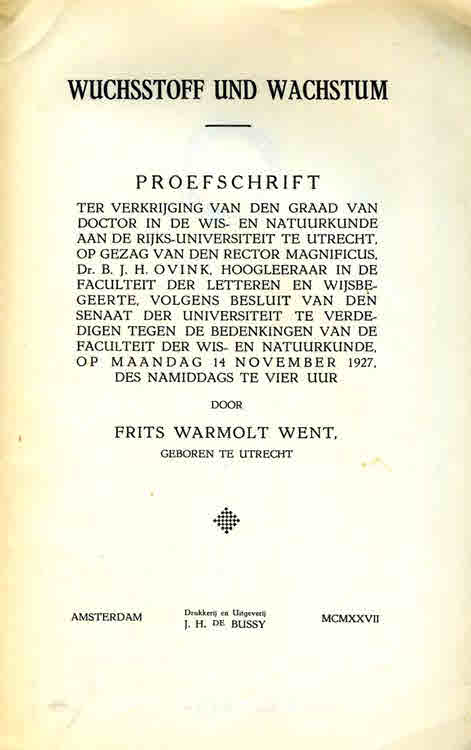
F.W. Went's research on the natural root forming substance and later important studies
In 1928 Fritz W. Went published his doctorial thesis "Wuchsstoff und Wachstum" Growth-substance and growth. Went's thesis describes the theory of natural substance production and a method, 'bioassay', to determine the substance.
The Chemical Nature of the Root forming Substance
F. W. Went and K. Thimann (1934) |