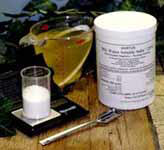
K-IBA a Plant Rooting Hormone Buy IBA Now! (indole butyric acid) Make Water based rooting solutions. Replaces Technical IBA K-IBA and "Dip" type alcohol based pre-mixes Important Notice to growers who have purchase(d) Technical IBA and K-IBA from LAB SUPPLIERS On July 12, 2010 the US EPA issued a 'STOP SALE ORDER' for all un-registered IBA and K-IBA from one or more LAB suppliers. The supplier(s) may say that the EPA 'changed the laws' on sale of these products; this is false. The US EPA is enforcing the FIFRA law enacted in 1972. The 'Stop Sale Order' DOES NOT APPLY TO PRODUCTS ON THIS WEBSITE: Hortus IBA Water Soluble Salts & Rhizopon AA dry powders and Tablet products. They are US EPA registered and STILL AVAILABLE from your favorite horticultural suppliers. Hortus IBA Water Soluble Salts are Lower Cost, Replace, and Work Better Than IBA, K-IBA, and alcohol based Pre-Mix Rooting Solutions. For distributor referral and distributor purchases call Phytotronics 314-770-0717, or email sales@phytotronics.com |
Product Selection to Make Fresh Rooting Solutions RHIZOPON AA WATER SOLUBLE TABLETS Use the pre-dosed tablets with water to make your own freshest solutions in any concentration. You measure the dosage by simply counting tablets and mix into water. A scale is not needed.
HORTUS IBA WATER SOLUBLE SALTS Use the easy to measure powder with water to make your own freshest solutions in any concentration. You can make solutions to over 100,000 ppm IBA active ingredients. The Salts are an economical for making large solution volumes. Hortus IBA Water Soluble Salts is an easier to use and registered replacement technical IBA and K-IBA.
RHIZOPON AA WATER SOLUBLE TABLETS and HORTUS IBA WATER SOLUBLE SALTS are completely free of potentially phyto-toxic and flammable alcohol. You make solutions from very dilute to extremely concentrated. The solutions are odorless. Both are US EPA registered with WPS Zero Hour REI. Growers can apply the products and remain in the growing area. There is minimum PPE with no notification requirement. Concentration
For the following methods use only water to dissolve the tablets or salts. One Rhizopon AA Water Soluble tablet contains 50mg of IBA active ingredient. Therefore 1 tablet in one liter of water yields a solution of 50 ppm IBA active ingredient. This is equal to and has the same method of use as Hortus IBA Water Soluble Salts. The salts contain 20% IBA. Therefore to obtain the same 50 ppm IBA you dissolve 250 mg (1/4 gram) of the salts in water. The results of the tablets and salts are the same. The tablets are easier to measure since you count tablets per liter water. Using the salts you use a scale to measure the amount.
For your perennials and leafy cuttings we have several methods: The tablet rate is listed but you can convert 1 tablet=50 mg IBA = 250 mg Hortus IBA Water Soluble Salts = 50 ppm IBA active ingredient.
Spray Drip Down Method. First plant the cuttings then treat them. Spray the solution evenly over the cuttings until drops go down to the media. Herbaceous cuttings, chrysanthemum, begonia, dieffenbachia, heath, hibiscus, etc: 1-5 tablets per liter water.
Total Immerse Method. First totally immerse the cuttings in the solution for a few seconds then plant them. Broad leaf cuttings are especially suited for this method. You can use a basket to dip the cuttings in a tub. Prevent bruising by not placing too many cuttings in the solution at once. Allow time for the solution to dry on the cuttings before watering, misting or covering. The temperature of the solution should be at least equal to the cutting temperature. A cold solution temperature causes the stomata of the cuttings close; the amount of active ingredients absorbed is reduced. Herbaceous cuttings, chrysanthemum, plumbago, ivy, clematis, delphinium, lavender, ficus, potted rose bushes, etc.: 1-5 tablets per liter water. Softwood cuttings, hydrangea, pieris, hedera, etc: 1-6 tablets per liter water. Hardwood cuttings, conifers, etc: 4-10 tablets per liter water
Basal Long Soak Method. Use the Basal Long Soak Method on cuttings which are more difficult to root or are more woody. A long soak of the cuttings in a low concentration solution causes the plant tissues to absorb the active ingredients. Use this method on plants which may be sensitive to high concentration used in the Quick Dip Method. Immerse the basal end of cuttings approximately one inch in the solution for 12-24 hours (nominal). Plant the cuttings immediately or store in cold storage. Herbaceous cuttings: 1-3 tablets per liter water. Woody cuttings: 3-5 tablets per liter water
Quick Dip Method. First treat the cuttings then plant them. Immerse the basal end of cuttings approximately one inch in the solution for a few seconds. Plant the cuttings immediately. Use the lowest possible concentration of tablets to achieve the desired results. An excess concentration may result in a reduced numbers of roots formed, phyto toxicity, shock, excessive callus, and rooting inequality. Herbaceous cuttings, tropical plants, house plants, roses, etc: 3-10 tablets per liter water. Chrysanthemum: 4-10 tablets per liter water. Softwood cuttings: 20 tablets per liter. Hardwood cuttings: 40 tablets per liter. Difficult to root hardwood cuttings: 100-400 tablets per liter
YODER BROTHERS and ARIS Horticulture, Green Leaf Plants, are the world's leading growers of all types of Chrysanthemums: garden, pot and spray and perennial plants. Follow this link for ways they use and recommend Hortus IBA Water Soluble Salts


They say that on receipt of cuttings. Then they say it is always best to plant (rooted) or stick (unrooted) garden mum cuttings immediately. If the cuttings cannot be planted immediately, they may be stored for several days in a cooler at 33 to 40 F. Before placing cuttings in the cooler, inspect them for damage from heating or freezing, breakage or dehydration. And they remind that the holding cuttings in sheds, barns, etc., is not suggested.
They go on to say for the rooting of the unrooted cuttings: the use of a rooting hormone increases rooting uniformity. Using our basal immerse quick dip method they say to apply 1200 - 1500 ppm IBA in powder or liquid form to the bottom one-eighth to one-fourth inch of cuttings before sticking. Using our spray drip down method they say an alternate method is to spray cuttings after stick with 200 ppm IBA. If spraying IBA, stick cuttings, water in, mist, and spray after dark or in early morning and resume mist after cuttings begin to wilt. Contact Phytotronics: 13688 Rider Trail North; Earth City, MO 63045; (314) 770-0717; www.phytotronics.com for IBA distributor lists.
For the media they say to always stick cuttings into moist root media. Sticking a garden mum cutting into dry media is a sure way to reduce its initial growth and future potential. Cell tray sizes range from 36-48,50-72-105. The longer one plans to keep in the cell tray before planting, the bigger the cell should be. Proper handling in the cell tray is CRITICAL! Allowing plants to become over rooted, dried out, crowded, and under fertilized, all serve to check plant growth, reduce breaking action, and can set the stage for severe budding in this very early stage of the crop. Cuttings can also be direct stuck to the finishing container, but that requires much more propagation space. For misting their basic information uses the misting guidelines: 1 to 3 days after stick - 10 seconds every 5 to 10 minutes; 4 to 7 days after stick, callus is being formed - 10 seconds every 20 minutes; 8 to 15 days after stick, roots are being formed - 10 seconds every 30 minutes.
Comprehensive information on plant propagation from cuttings can be found by starting your research at our .
Some plant cuttings at some times of the year root better using our Rhizopon AA #1, #2 or #3 dry dip powders.
There is very useful information at our rose and other plant basic information page

The advantage of Rhizopon AA Water Soluble Tablets and Hortus IBA Water Soluble Salts is briefly discussed: Advances using Indole-3-butyric Acid (IBA) dissolved in water for rooting cuttings, transplanting and grafting. The use of water to dissolve IBA Salts
|